Your First Apartment Checklist After Graduation
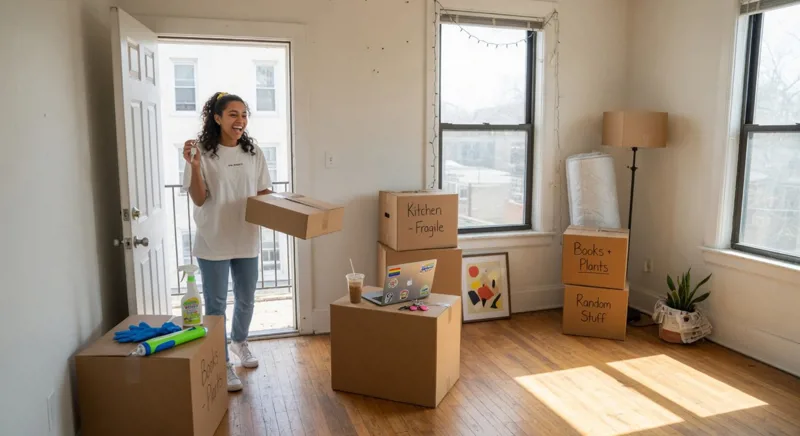
Moving into your first apartment after graduation is exciting—and a little overwhelming. This first apartment checklist after graduation helps you plan your budget, review your lease, set up utilities, protect your belongings, and make your new place feel like home.
1. Set a Realistic First Apartment Budget
Before touring apartments, calculate the full monthly cost—not just the advertised rent. A manageable budget should account for housing, utilities, transportation, food, debt payments, savings, and unexpected expenses.
- Monthly rent
- Security deposit
- Application and administrative fees
- Electricity, gas, water, sewer, and trash
- Internet and mobile service
- Renter’s insurance
- Parking, pet, laundry, or amenity fees
- Furniture, kitchen supplies, and moving costs
Utilities can add significantly to your housing costs. Electricity and gas are often the renter’s responsibility, while water, sewer, and trash may be included in rent or billed separately.[1][2] Ask for average utility bills from the current tenant or property manager before signing.
2. Gather Documents for the Rental Application
Landlords commonly review your income, credit history, rental history, and identity. Recent graduates may not have a long rental record, so prepare your paperwork in advance.
- Government-issued photo ID
- Employment offer letter or recent pay stubs
- Bank statements, if requested
- References from an employer, professor, or previous landlord
- Social Security number for a credit check
- Contact information for a cosigner, if needed
If your new job has not started yet, ask whether the landlord accepts an offer letter as proof of income. A qualified cosigner or larger deposit may be required, depending on local law and the property’s screening policy.
3. Read the Lease Before Signing
Your lease explains your legal responsibilities, payment obligations, and rights as a tenant. Do not rely only on a verbal promise from a leasing agent—make sure every important agreement appears in writing.
Check These Lease Details
- Monthly rent and due date
- Lease start and end dates
- Late fees and grace periods
- Security deposit rules and refund process
- Utilities included in rent
- Maintenance responsibilities
- Guest, roommate, pet, and subletting policies
- Renewal terms and rent-increase procedures
- Early termination and lease-break fees
- Parking, storage, and amenity charges
Pay close attention to automatic renewal language. Also check whether renters insurance is mandatory and whether the building requires a specific liability limit.
4. Arrange Renters Insurance
Renters insurance can help protect your personal property against covered events such as theft, fire, or certain types of water damage. It may also include liability coverage if someone is injured in your apartment or you accidentally damage another unit.
Create a basic home inventory before moving in. Photograph expensive belongings, save receipts when available, and store copies of important documents digitally. Your landlord’s insurance generally covers the building—not your furniture, electronics, clothing, or other personal possessions.
5. Schedule Utilities Before Move-In Day
Contact utility providers one to two weeks before your lease begins so essential services are active when you arrive.[3] Confirm exactly which accounts must be placed in your name.
- Electricity
- Natural gas
- Water and sewer
- Trash service
- Internet
Ask whether the apartment has a required internet provider, an existing modem, or a transfer process for utilities. If you work remotely, schedule internet installation early rather than assuming service will be available immediately.
6. Complete a Move-In Inspection
Before unpacking, inspect every room carefully. Record scratches, stains, dents, leaks, broken fixtures, and appliances that do not work. Take date-stamped photos and video, then submit the completed move-in condition report according to your lease.
- Test every light switch and electrical outlet.
- Run faucets and check under sinks for leaks.
- Test heating and air conditioning.
- Confirm smoke and carbon monoxide detectors work.
- Check locks, windows, doors, and screens.
- Inspect floors, walls, ceilings, cabinets, and appliances.
- Look for signs of pests or water damage.
Keep a signed copy of the inspection report and your photographs. Detailed documentation can help show that damage existed before your tenancy and protect your security deposit.[4][5]
7. Buy the First-Apartment Essentials
You do not need to furnish the entire apartment at once. Start with items that support sleep, cooking, cleaning, safety, and daily routines.
| Room | Useful essentials |
|---|---|
| Bedroom | Mattress, sheets, pillows, hangers, and a lamp |
| Kitchen | Pan, pot, knife, cutting board, dishes, utensils, and food containers |
| Bathroom | Shower curtain, towels, toiletries, plunger, and basic cleaning supplies |
| Cleaning | Vacuum or broom, mop, trash bags, disinfectant, sponges, and laundry detergent |
| Safety | First-aid kit, flashlight, batteries, and a small fire extinguisher |
8. Protect Your Finances and Routine
Set up automatic rent reminders, keep an emergency fund, and save your lease, insurance policy, inspection report, and utility confirmations in one secure folder. Update your mailing address with your employer, bank, school, subscriptions, and government agencies.
It is also smart to learn how maintenance requests work before an emergency occurs. Save the property manager’s contact information and find out which problems require immediate reporting, such as gas odors, flooding, electrical hazards, or a broken heating system.
Final First Apartment Checklist
Before move-in day, confirm that you have:
- Reviewed and signed the lease
- Budgeted for rent, deposits, utilities, and household costs
- Purchased required renters insurance
- Scheduled electricity, gas, water, and internet
- Completed a written move-in inspection
- Photographed the apartment’s condition
- Purchased basic furniture and household supplies
- Saved emergency, landlord, and maintenance contacts
Your first apartment does not need to be perfect on day one. With this first apartment checklist after graduation, you can handle the practical details first, avoid expensive surprises, and build a comfortable home at a pace that fits your new post-college budget.
References
You May Also Like
 Careers
What No One Explains About the First Year of Work
 Careers
Understanding Employee Benefits for the First Time
 Careers
Skills Employers Still Value in the AI Era