How Artificial Intelligence Is Changing Everyday Jobs
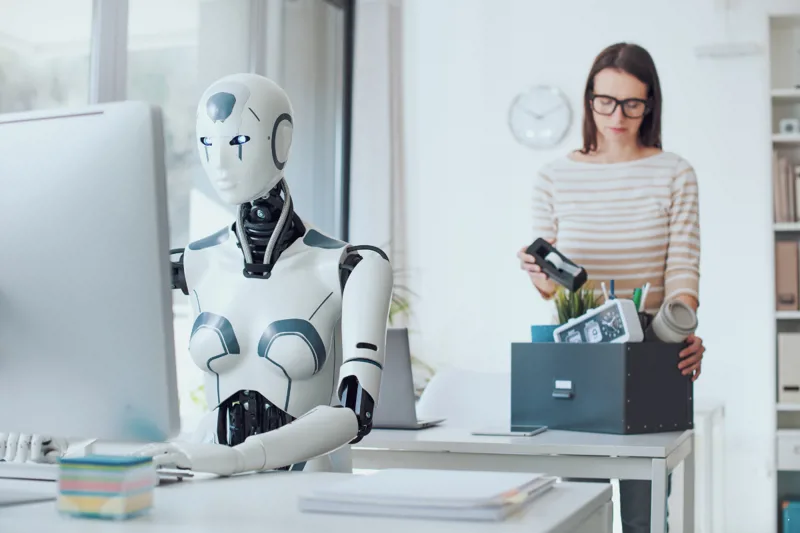
Artificial Intelligence (AI) is no longer a distant dream—it's the engine quietly transforming the way we work, reshaping jobs from the factory floor to the executive suite. Here’s how AI is rewriting the rules of everyday employment, and what it means for workers everywhere.
AI’s Double-Edged Sword: Job Losses and New Opportunities
The numbers are staggering: by 2025, AI and automation could displace 85 million jobs worldwide, according to the World Economic Forum. But there’s a twist—these same technologies are expected to create 97 million new roles, many of which are more aligned with the evolving partnership between humans, machines, and algorithms[2]. This isn’t just a wave of disruption; it’s a tidal shift in how work gets done.
Which Jobs Are Most at Risk?
AI’s impact is most visible in roles that involve structured, repetitive tasks. Think of customer service representatives, where chatbots and virtual assistants now handle routine queries with lightning speed and 24/7 availability[1]. Receptionists are being replaced by AI-powered kiosks and digital concierges that can see, listen, and interact with guests[1]. Even accountants and bookkeepers are feeling the squeeze, as cloud-based AI systems automate data entry, reconciliation, and reporting[1].
White-Collar Work Isn’t Immune
The AI revolution isn’t just a blue-collar story. Generative AI is making waves in high-skill sectors like law, media, and finance. A 2023 Goldman Sachs study suggested that up to 300 million full-time jobs could be affected globally, as AI tools draft legal documents, analyze financial data, and even generate news articles[2]. The line between what machines and humans can do is blurring fast.
AI as a Supercharged Assistant
But it’s not all about replacement. In many fields, AI is becoming a supercharged assistant, boosting productivity and freeing up humans for more creative, strategic work. In engineering, for example, AI tools help design complex systems, simulate outcomes, and optimize processes. The Bureau of Labor Statistics projects robust growth for software developers (up 17.9% by 2033) and engineers, as demand for their expertise remains strong—even as AI takes over routine tasks[3].
Agentic AI: The Rise of Autonomous Digital Workers
The latest leap is agentic AI—systems that don’t just follow instructions, but can reason, plan, and act autonomously. Imagine an AI agent in a call center that not only answers questions, but also processes payments, checks for fraud, and completes shipping—all without human intervention[4]. Companies like Salesforce are embedding these capabilities into their platforms, creating a “digital workforce” that collaborates with humans to deliver better outcomes[4].
Jobs AI Can’t Replace (Yet)
Not every job is at risk. Roles that require emotional intelligence, creativity, and complex problem-solving remain firmly in human hands. Nurses, teachers, therapists, and leaders—these are professions where the human touch is irreplaceable. Even in finance, while “robo-advisors” are gaining ground, the demand for personal financial advisors is projected to grow by 17.1% over the next decade, as clients still value human judgment and empathy[3].
How Workers and Companies Are Adapting
The AI transformation is forcing both employees and employers to adapt. Workers are upskilling, learning to collaborate with AI tools, and focusing on uniquely human strengths. Companies are rethinking job design, investing in training, and supporting displaced workers with new opportunities[2]. The most successful organizations are those that see AI not as a threat, but as a partner in innovation.
The Future: Human + Machine Teams
As AI becomes more capable, the future of work is shaping up to be a blend of human ingenuity and machine efficiency. Routine tasks will increasingly be handled by algorithms, while humans focus on what we do best: connecting, creating, and leading. The challenge—and the opportunity—is to harness AI’s power to make work not just more productive, but more meaningful for everyone.
In the end, AI isn’t just changing jobs—it’s changing us. The question isn’t whether your job will change, but how you’ll change with it.
References
You May Also Like
 Careers
What No One Explains About the First Year of Work
 Careers
Understanding Employee Benefits for the First Time
 Real Estate
Your First Apartment Checklist After Graduation