How to Take Notes That You'll Actually Use
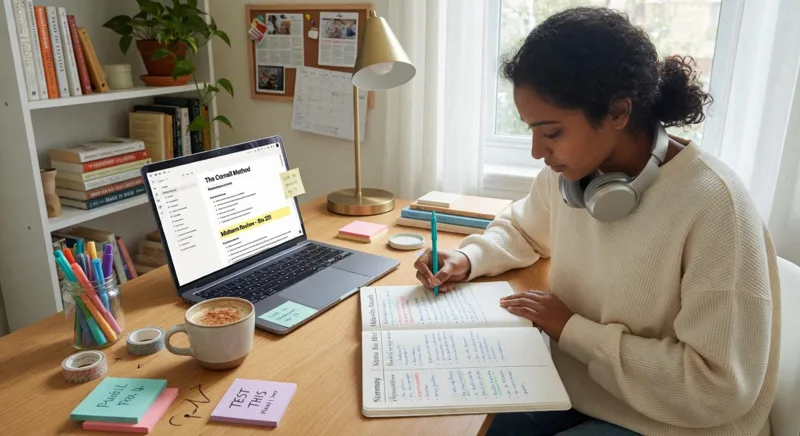
Learning how to take notes that you’ll actually use is less about writing everything down and more about capturing ideas in a form you can understand, remember, and apply. With the right note-taking system, your notes become a practical study guide instead of a pile of forgotten pages.
Why Most Notes Become Useless
Many people treat note-taking like transcription. They copy every sentence from a lecture, highlight entire pages, or save online articles without processing the information. The result may look organized, but it does little to improve understanding.
Useful notes should answer three questions:
- What is the main idea?
- Why does it matter?
- How can I use or explain it later?
That shift—from recording information to working with it—is the foundation of effective note-taking.
Choose a Note-Taking Method That Fits the Situation
There is no single best note-taking method for everyone. Your approach should match what you are doing, whether you are attending a lecture, reading a book, joining a meeting, or researching a project.
The Cornell note-taking system
The Cornell method divides a page into three sections: a large notes area, a narrow cue column, and a summary section at the bottom. During a lecture or reading session, record concise ideas in the main area. Afterward, write questions or keywords in the cue column and summarize the page in a few sentences.
This system works well because it builds review and self-testing into the page. Cornell University guidance recommends creating questions from your notes, covering the main notes, and recalling the answers in your own words.[1]
The outline method
An outline is useful when information has a clear hierarchy. Start with the main topic, then add supporting points, examples, and details beneath it. Use indentation to show how ideas relate to one another.
This method is especially helpful for:
- Textbooks and nonfiction books
- History, science, and business lectures
- Research papers and presentations
- Meeting agendas and project plans
The mapping method
Mind mapping works well when ideas connect across several themes. Place the central concept in the middle of the page, then draw branches for related topics. Add examples, definitions, causes, or consequences around each branch.
Use a concept map when you need to understand relationships rather than memorize a list of facts.
Capture Ideas, Not Every Word
Strong notes are selective. Listen for definitions, examples, explanations, changes in direction, and ideas the speaker repeats or emphasizes. Write in short phrases rather than complete sentences whenever possible.
For example, instead of writing:
“Active recall is a learning technique in which a person deliberately retrieves information from memory rather than simply rereading it.”
Write:
- Active recall = retrieve, don’t reread
- Use questions, flashcards, or practice tests
- Reveals knowledge gaps
This format is faster to create and easier to review. Leave blank space for details you may add later, and mark confusing points with a question mark instead of pretending you understand them.
Turn Notes Into Questions
Questions make notes useful because they turn passive information into a study tool. After a class, chapter, podcast, or meeting, convert important points into prompts.
Try questions such as:
- What problem does this idea solve?
- How would I explain this to someone else?
- What is an example?
- How is this different from a related concept?
- What should I do next?
Questions also make it easier to use active recall. Instead of rereading a page repeatedly, cover the answers and try to reconstruct the ideas from memory.
Review Your Notes Within 24 Hours
Notes become far more valuable when you revisit them soon after creating them. Within a day, spend a few minutes correcting unclear wording, filling gaps, adding questions, and writing a short summary.
Effective review does not require a long study session. Use a simple schedule:
- Review the notes within 24 hours.
- Test yourself again a few days later.
- Review the key questions the following week.
- Return to difficult material before an exam or important task.
Learning-support guidance commonly pairs note-taking with recitation, reflection, and spaced review rather than relying on rereading alone.[2] Spreading review across several sessions helps you retrieve information when you actually need it.
Make Notes Actionable
For work, meetings, and personal projects, notes should lead to decisions or actions. Separate general information from responsibilities.
A practical meeting note might include:
- Decision: What was agreed?
- Reason: Why was it chosen?
- Action: What needs to happen next?
- Owner: Who is responsible?
- Deadline: When is it due?
Before closing your notebook or app, identify the next action in plain language. “Work on report” is vague. “Draft the introduction by Thursday” is actionable.
Digital Notes or Handwritten Notes?
Both formats can work. Digital notes are searchable, easy to reorganize, and convenient for large projects. Handwritten notes may encourage slower processing and summarization; research-based guidance from Cornell’s Learning Strategies Center reports that handwriting can be more effective than typing for note-taking.[3]
The best choice depends on the task. Use handwriting when you need to understand a lecture or brainstorm. Use digital notes when you need searchable records, collaboration, links, or frequent updates. In either format, clarity and review matter more than appearance.
A Simple Note-Taking Workflow
Use this five-step process whenever you need notes that will remain useful:
- Prepare: Write the topic, date, and purpose at the top.
- Capture: Record key ideas, examples, questions, and decisions.
- Clarify: Mark confusing points and resolve them afterward.
- Compress: Summarize the material in your own words.
- Recall: Hide the notes and answer your questions from memory.
Conclusion
Learning how to take notes that you’ll actually use means creating notes for your future self. Capture fewer ideas, organize them clearly, turn them into questions, and review them through active recall and spaced repetition. When every page helps you remember, explain, or act on something, note-taking stops being busywork and becomes a reliable advantage.
You May Also Like
 Careers
What No One Explains About the First Year of Work
 Careers
Understanding Employee Benefits for the First Time
 Real Estate
Your First Apartment Checklist After Graduation