Scholarships: How to Spot Legitimate Opportunities
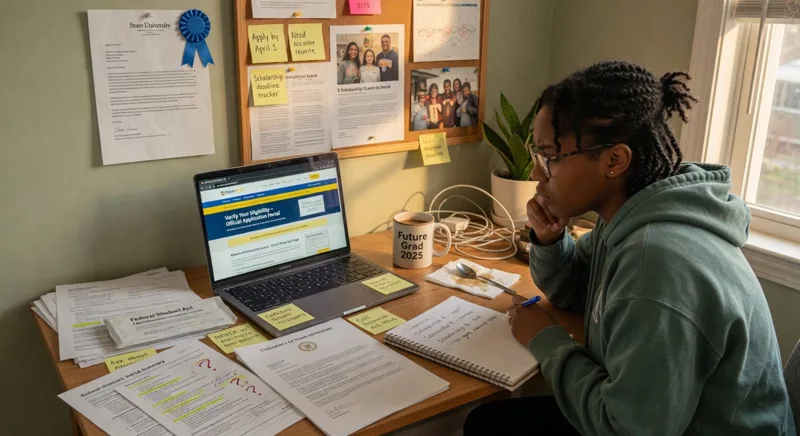
Scholarships can make college more affordable, but not every offer is genuine. Learning how to spot legitimate opportunities helps you protect your money, personal information, and future while finding real college funding.
Why Scholarship Scams Are So Common
Students and families often search for scholarships under pressure, which makes flashy promises especially persuasive. Scammers may imitate colleges, nonprofits, government agencies, or scholarship search services to collect application fees, banking details, or identity information.
A legitimate scholarship should clearly explain who provides the award, who qualifies, how to apply, when applications close, and how recipients are selected. If those details are missing or difficult to verify, pause before sharing information.
How to Spot Legitimate Scholarship Opportunities
1. Research the scholarship sponsor
Start by identifying the organization behind the award. A credible sponsor should have a professional website, verifiable contact information, and a clear history of supporting students. Look for the organization’s official website independently rather than relying only on a link in an unexpected email or social media message.
Check whether the scholarship is listed by a college financial aid office, school counselor, established nonprofit, professional association, employer, or government education agency. Search the sponsor’s name along with terms such as “complaint,” “scam,” or “reviews,” but remember that a polished website alone does not prove legitimacy.
2. Never pay to apply or receive an award
One of the clearest scholarship scam warning signs is an upfront charge. Legitimate scholarships generally do not require an application fee, processing fee, redemption fee, insurance payment, or “tax” before you can receive the money. The Federal Trade Commission advises students never to pay to apply for a scholarship or grant.[2]
Be especially cautious when an offer asks for:
- A credit card number to confirm eligibility
- Bank account information to hold an award
- A monthly fee for access to scholarship listings
- Payment for guaranteed scholarship matching
- Money to release or transfer a supposed award
Free financial aid resources are available, including the Free Application for Federal Student Aid, commonly called the FAFSA. Students do not need to pay a private company to complete or submit it.[1][3]
3. Be skeptical of guaranteed scholarships
No reputable provider can guarantee that every applicant will receive an award. Scholarships are competitive, and selection normally depends on eligibility requirements, academic performance, financial need, community involvement, essays, talent, or another stated criterion.
Messages claiming you are “pre-selected,” “a finalist,” or an instant winner—especially when you never entered—are major red flags. Legitimate organizations explain the application process rather than promising money simply for registering or paying a fee.[3][4]
4. Examine the application carefully
A trustworthy application should request information relevant to the award. It may ask about your education, activities, academic goals, financial circumstances, or community service. It should not demand unnecessary sensitive details at the beginning.
Do not share your Federal Student Aid account password, full banking credentials, or identity documents through an unverified website. Confirm that the website address belongs to the organization you intended to contact. Avoid submitting information through suspicious forms with poor spelling, unusual domains, or aggressive pop-up requests.
Scholarship Scam Red Flags at a Glance
| Warning sign | Why it matters |
|---|---|
| “Guaranteed” award | Legitimate scholarships cannot promise selection to everyone. |
| Upfront application or processing fee | You may be paying for a nonexistent award or a basic public listing. |
| Urgent deadline you never expected | Pressure can prevent you from researching the sponsor. |
| Request for credit card or bank details | The offer may be designed to cause unauthorized charges or identity theft. |
| Notice of winning without applying | You cannot normally win a scholarship contest you never entered. |
| Vague sponsor information | Missing eligibility and contact details make verification difficult. |
A Safe Scholarship Verification Process
- Save the original message. Keep the email, website address, phone number, and application instructions.
- Find the sponsor independently. Type the organization’s name into a search engine instead of clicking an unexpected link.
- Confirm the award details. Look for eligibility rules, selection criteria, award amounts, deadlines, and privacy information.
- Contact a trusted office. Ask your school counselor, college financial aid office, or a recognized education agency for an independent opinion.
- Refuse payment demands. Do not send money simply to apply, claim, or “unlock” scholarship funds.
- Report suspicious activity. The FTC recommends reporting suspected scams through its fraud-reporting service.[2]
How to Find Real Scholarships More Safely
Begin with sources that have a clear connection to your education or community. Check your school’s scholarship bulletin, college financial aid office, local foundations, employers, professional associations, libraries, and reputable nonprofit organizations.
Use scholarship search platforms carefully. A search service can help you discover opportunities, but read its privacy policy and pricing terms before creating an account. A service that promises secret funding, guaranteed awards, or exclusive access in exchange for payment deserves extra scrutiny. Most scholarship matching services organize opportunities that are already publicly available.[3]
What to Do If You Already Shared Information
If you paid money or submitted sensitive information to a suspicious provider, act quickly. Contact your bank or card issuer, change affected passwords, enable multifactor authentication, and monitor account activity. Save all communications and report the incident to the appropriate consumer-protection agency.
You can also notify your school’s financial aid office. Staff may recognize the organization, warn other students, and help you determine whether additional steps are needed.
Final Takeaway
Spotting legitimate scholarship opportunities comes down to verification, patience, and skepticism toward promises that sound too easy. Research the sponsor, read the eligibility rules, protect your personal information, and remember the simplest rule: you should not have to pay money to get free scholarship money. A few careful checks can help you focus on genuine ways to reduce college costs.
You May Also Like
 Careers
What No One Explains About the First Year of Work
 Careers
Understanding Employee Benefits for the First Time
 Real Estate
Your First Apartment Checklist After Graduation